Beyond 'Decisionism': A Theological Critique of the Four Spiritual Laws 超越“决定论”:对“四个属灵原则”的神学辨析
Examining the theological gaps in the modern 'Four Spiritual Laws' model, returning to a God-centered view of salvation and the sovereign work of the Spirit. 考察现代“四个属灵原则”传福音模式中的神学偏差,呼吁从“人本中心”回归到以主权之神、圣灵重生为核心的福音观。
Listen to English audio
聆听中文语音
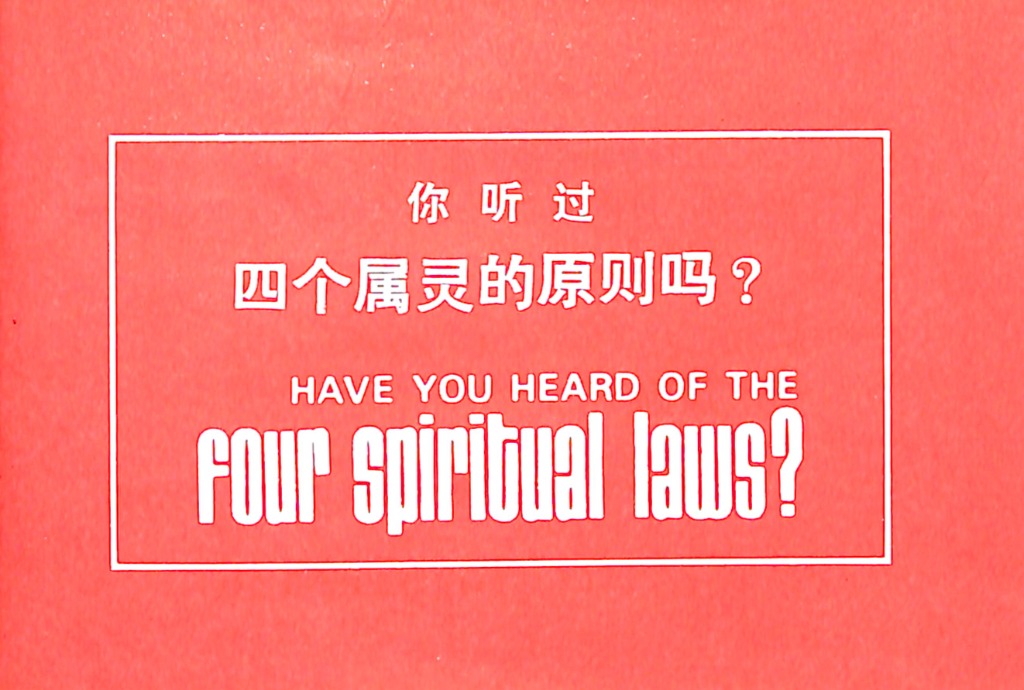
I. Introduction: The Weight of the Gospel
The “Four Spiritual Laws,” popularized in the mid-20th century, has become one of the most widely used evangelistic frameworks in modern history. Its simplicity is undeniable, and its reach is vast. However, in our attempt to make the Gospel “simple,” have we accidentally made it something other than the biblical Gospel?
Evangelism must be more than a simplified sales pitch or a cosmic transaction. To honor God, our presentation of the Gospel must be faithful to the fullness of His holy character and the reality of our fallen condition. As we peel back the layers of this popular model, we find that it often trades the sovereign majesty of God for a human-centered “decisionism.”
一、 引言:福音的分量
诞生于20世纪中叶的“四个属灵原则”(简称“四律”),已成为现代历史上使用最广泛的传福音框架之一。它的简洁性不言而喻,其影响力也极其深远。然而,在我们试图将福音“简单化”的过程中,是否不小心将其扭曲成了圣经福音之外的某种东西?
传福音绝不能沦为一套简单的销售话术,或是某种平面的宇宙交易。为了荣耀上帝,我们的福音呈现必须忠于祂神圣属性的全然丰富,以及人类堕落境况的真实惨烈。当我们剖析这一流行模式的底层逻辑时,会发现它往往为了迎合现代人的“自主性”,而在不经意间用“人本中心”的决定论取代了上帝那无可抗拒的主权威严。
II. Law 1: A “Wonderful Plan” vs. The Holy Decree
The Popular View: “God loves you and has a wonderful plan for your life.”
The issue with this opening statement is its extreme subjectivity. While it is true that God’s plan for His creation is ultimately good for His glory, to tell an unrepentant sinner that God has a “wonderful plan” for them personally—without first addressing their enmity with God—can be misleading.
The Theological Critique: In Scripture, the “plan” of God for those remaining in their sins is not described as “wonderful” in the modern sense of personal happiness. Instead, Jesus declares:
"Whoever believes in the Son has eternal life, but whoever rejects the Son will not see life, for God’s wrath remains on them."
— John 3:36
God’s love is not a sentimental benevolence but a holy devotion to His own glory. To present God as a divine assistant waiting to fulfill a person’s “abundant life” risks making the sinner the center of the story and God the means to an end.
二、 原则一:万事如意的计划与神圣的主权预旨
普遍的表述: “神爱你,并且为你的生命有一套奇妙的计划。”
这一开场白的问题在于其极强的“主观性”。虽然上帝对受造界的最终计划确实是为了祂的荣耀而尽善尽美,但如果对一个尚未悔改、正处于与神敌对状态的罪人说上帝为他个人准备了一个“奇妙的计划”(而不先说明他正处于上帝的震怒之下),这在神学上是极大的误导。
神学辨析: 在圣经中,对于那些顽梗在罪中的人,上帝的“计划”绝非现代语境下那种追求个人幸福感的“奇妙”。相反,圣灵藉着经文宣告:
“信子的人有永生;不信子的人得不着生,神的震怒常在他身上。”
——约翰福音 3:36
上帝的爱不是一种感伤的人本善意,而是对祂自身荣耀的神圣捍卫。如果我们将上帝呈现为一个等待着为人实现“丰盛生命”的助手,那么罪人就成了故事的主角,而上帝仅仅成了达成个人目标的手段。
III. Law 2: Separation vs. Spiritual Death
The Popular View: “Man is sinful and separated from God.”
The “Four Laws” often uses a diagram of a bridge over a great gulf. This implies that man is standing on one side of a cliff, perfectly alive, staring at God on the other side, needing only a way to cross.
The Theological Critique: Biblical diagnosis goes much deeper than “separation.” The Bible calls it Death.
"As for you, you were dead in your transgressions and sins..."
— Ephesians 2:1
A man who is separated can walk, think, and choose to cross a bridge. But a man who is dead can do nothing. By Framing the problem as a “gulf to be bridged” rather than a “corpse to be resurrected,” we subtly suggest that the sinner still possesses the moral ability to seek God if the right bridge (Christ) is presented.
三、 原则二:距离的隔阂与灵魂的死亡
普遍的表述: “人有罪,与神隔绝。”
在介绍这一原则时,通常会画一个跨越鸿沟的“桥梁图”。这暗示着人正活生生地站在悬崖的一侧,盯着对岸的上帝,只需要寻找一条路跨过去即可。
神学辨析: 圣经对人类境况的诊断远比“隔绝”要深刻得多。圣经将其定义为死亡。
“你们死在过犯罪恶之中,祂叫你们活过来……”
——以弗所书 2:1
一个“隔绝”的人依然能走、能想、能主动决定跨过桥梁;但一个死人什么也做不了。如果我们将问题仅仅描述为需要跨越的“鸿沟”,而非需要发出的“复活”,我们就在潜意识中放任了罪人依然拥有“寻求上帝”之道德能力的假象——仿佛只要桥(基督)搭好了,死人就能自己爬起来走过去。
IV. Law 3: Provision vs. Substitutionary Accomplishment
The Popular View: “Jesus Christ is God’s only provision for man’s sin.”
The word “provision” suggests that Christ’s death provided a possibility or a “reserve” of salvation—a potential cure sitting on a shelf waiting for a customer.
The Theological Critique: Christ did not die to make salvation possible for those who would choose Him; He died to make salvation certain for those the Father had given Him.
"Christ did not die to make men savable, but to save them. ... We say that Christ so died that He infallibly secured the salvation of a multitude that no man can number."
— Charles Spurgeon
Jesus did not say He was a “provision” for the sheep, but that He actually gave His life for them (John 10:15). In the modern model, the effectiveness of Christ’s blood is held hostage by the sinner’s response. But in a God-centered view, the cross is an actual achievement, not just a potential offer.
四、 原则三:救恩的“备选方案”与确定的代替赎罪
普遍的表述: “耶稣基督是神为人的罪所预备的唯一救法。”
“预备救法”或“拨出条款(Provision)”这类词汇听起来就像是基督的死仅仅是创造了一种“被救的可能性”,或者说是在货架上预备了一份万灵丹,正等着顾客去取用。
神学辨析: 基督降世受死不仅仅是为了让救恩变得“可能”(只要你选择祂就行);祂受死是为了让圣父赏赐给祂的人得救变得“确定”。
“基督受死不是为了使人‘有被拯救的可能’(savable),而是为了确确实实地拯救他们。……我们不仅说基督使得救成为可能,更宣告祂的死绝对无谬地保证了那不可胜数的群众之救恩。”
—— 查尔斯·司布真 (Charles Spurgeon)
耶稣从没说祂是对羊的一项“预备条款”,而是说祂实实在在地为羊舍命(约10:15)。在现代模式中,基督宝血的功效仿佛被罪人的反应所绑架;但在以神为中心的真理中,十字架是一个实质性的成就,而非仅仅是一个潜在的邀约。
V. Law 4: The “Act of the Will” vs. Sovereign Regeneration
The Popular View: “We must individually receive Jesus… by personal invitation… as an act of the will.”
This is where the model is most problematic. It often quotes Revelation 3:20 (“Behold, I stand at the door and knock”) as if Jesus is a gentleman solicitor waiting on the porch of a sinner’s heart.
The Theological Critique: Revelation 3:20 was written to a church (Laodicea), not as an evangelistic description of how the Spirit works in the heart of an unbeliever. The idea that salvation is triggered by an autonomous “act of the will” directly contradicts Scripture:
"...children born not of natural descent, nor of human decision or a husband’s will, but born of God."
— John 1:13
Faith is not the trigger for the New Birth; it is the symptom of the New Birth. We do not “open the door” so that God can change us; God changes our hearts of stone into hearts of flesh, and therefore we joyfully open the door to our King. Law 4 risks making the human will the “prime mover” of salvation.
五、 原则四:人的“意愿行为”还是神的主权重生
普遍的表述: “我们必须亲自接受耶稣……藉着个人的邀请……作为一种意志的行动。”
这是该模式最成问题的地方。它常引用启示录 3:20(“看哪,我站在门外叩门”),仿佛耶稣是一位在罪人心灵门廊前焦虑等待的“绅士推销员”。
神学辨析: 启示录 3:20 是写给教会(老底嘉)的训辞,而非传福音时对圣灵如何在不信者心中作工的定义描述。那种认为救恩是由一个自主的“意志行动”所触发的观点,直接违背了经文:
“这等人不是从血气生的,不是从情欲生的,也不是从人意生的,乃是从神生的。”
——约翰福音 1:13
信心不是“重生”的导火索,而是“重生”的必然迹象。我们并不是因为“开了门”上帝才救我们;而是上帝主权地将我们的石心换成了肉心,因此我们才欢喜快乐地向我们的君王大开城门。原则四最大的风险在于将人类意志拔高到了救恩“第一推动力”的地位。
VI. Conclusion: Let God Be God
The simplified Gospel of modern “Decisionism” is designed to produce statistics and quick results. But the biblical Gospel is designed to produce worship and awe. When we present a God who is helplessly waiting for a man’s permission to be gracious, we are robbed of the true comfort of the Gospel.
The comfort of the believer is not that they were smart enough to “make a decision,” but that a Sovereign God was gracious enough to choose them when they were dead in the grave (John 15:16).
Let us preach a Gospel that doesn’t just offer a “wonderful plan,” but heralds a Sovereign Rescue.
Soli Deo Gloria.
六、 总结:让上帝成为上帝
现代“决定论”那被过度简化的福音,是为统计数据和快速成效而设计的;但圣经中的福音,则是为产生敬拜和战兢而启示的。当我们呈现一个正在卑微等待人类准许才敢施恩的上帝时,我们就被剥夺了福音中真正的安慰。
信徒真正的安慰不在于由于他们足够聪明从而做出了某个“正确的决定”;而在于那位主权之上帝,竟然在他们还死在过犯中时,就有足够的恩慈主动地拣选了他们(约15:16)。
让我们传讲一个不只是提供“奇妙计划”、而是宣告“主权营救”的福音。
唯独神的荣耀。