From the Grave to Life: Sovereign Grace and the Reality of Regeneration in Lazarus 从坟墓到生命——拉撒路复活中的主权恩典与重生真相
A theological exploration of the resurrection of Lazarus, revealing the dynamic logic of grace where life is not a choice made by the dead, but a sovereign command given by Christ. 对拉撒路复活事件的深度分析,揭示救恩并非死人的选择,而是基督主权的命令——这一神圣逻辑彻底清算了“人本主义”的救恩假象。
Listen to English audio
聆听中文语音
I. Introduction: The Theological Key Behind the Miracle
The resurrection of Lazarus is one of the most beloved stories in the Gospel of John. However, if we view it merely as a touching tale of divine sympathy or a localized miracle of physical resuscitation, we miss its highest purpose. This event is not just a miracle; it is a profound theological statement—the supreme demonstration of God’s redemptive logic.
The Core Proposition: If salvation were a “gift” that a sinner must first “decide” to accept of their own autonomous will, then Lazarus would have needed to make a “decision” while still rotting in the tomb. But the biblical narrative shows the exact opposite. Life did not come because Lazarus chose it; Lazarus chose to walk out because Life had already sovereignly claimed him.
一、 引言:神迹背后的神学定调
拉撒路的复活是《约翰福音》中最令人动容的故事之一。然而,如果我们仅仅将其视为一个关于同情心的感人传说,或是上帝对肉身死亡的一次临时干预,我们就错过了它最高的神学目的。拉撒路的复活不只是一个神迹;它是上帝救赎逻辑的最高展示。
核心命题: 如果救恩是一场需要罪人先用自主意志“决定”去接受的礼物,那么拉撒路在被叫醒之前,必须在坟墓里先有一个“决定”。但事实截然相反。生命之所以临到,不是因为拉撒路选择了它;拉撒路之所以能走出坟墓,是因为“生命本身”主权地宣称了对他权柄。
II. The Reality of the Condition: Truly Dead
1. “By this time there is a bad odor”: Irreversible Decay
To understand the miracle, we must first accept the diagnosis. Martha reminds Jesus that Lazarus has been dead for four days.
"Lord, by this time there is a bad odor, for he has been there four days."
— John 11:39
In the Jewish understanding of that era, the soul was thought to hover near the body for three days. By the fourth day, all hope of resuscitation was gone; the body was “smelly” (ὄζει)—it was a state of irreversible decay.
The Spiritual Meaning: This is the biblical picture of “Total Depravity.” Sinners are not merely “sick,” “weak,” or “unconscious.” They are spiritually dead. A corpse has no appetite, no will toward life, and no capacity to “accept” a cure. To offer a “gift” to a dead man is futile unless you first give him the life to receive it.
二、 境遇的真实:死得透彻
1. “主啊,他现在必是臭了”:无可挽回的腐烂
要理解救恩的奇妙,必须先接受圣经对罪人的诊断。当耶稣要求挪开石头时,马大提醒祂,拉撒路已经死了四天了。
“主啊,他现在必是臭了,因为他死了已经四天了。”
——约翰福音 11:39
在当时的犹太认知中,人死后灵魂会在尸体旁徘徊三天。到了第四天,身体开始腐烂(ὄζει),所有复苏的希望都已彻底断绝。
属灵含义: 这正是圣经中关于“人全然败坏”的状态图点。罪人在属灵上不是“生病”,也不是“虚弱”,而是彻底的死人。死人没有食欲,没有向往,更没有能力去主动“接受”什么。对一个死人提供“礼物”是毫无意义的,除非你先赐予他能够领受礼物的“生命”。
2. Jesus’ Delay: For the Glory of God
When Jesus heard Lazarus was sick, He didn’t rush. He stayed where He was for two more days.
The Spiritual Meaning: God’s salvation does not follow a human timetable, nor is it held hostage by human emotion. Jesus delayed so that every human possibility would be exhausted. He waited until the situation was “hopeless” by human standards, ensuring that when the resurrection occurred, the glory would belong 100% to God alone.
2. 耶稣的延迟:为了上帝的荣耀
耶稣听说拉撒路病了,并没有急着赶去,而是在原处又住了两天。
属灵含义: 上帝的救恩不随人的时间表挪移,也不受人情感的挟持。耶稣的延迟是为了彻底排除任何“人本”的可能性。祂等到事情在人看来完全“绝望”时才动工,是为了确保当复活发生时,100%的荣耀都唯独归给上帝。
III. The Logic of Resurrection: Regeneration Precedes Faith
1. The Name Called: Effectual Calling
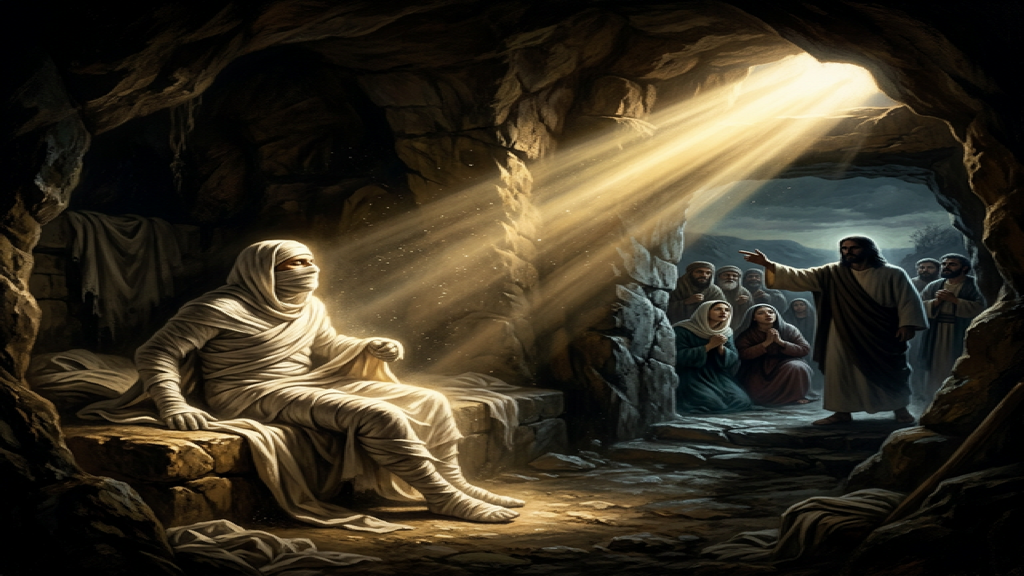
The climax occurs not with a suggestion, but with a command. Jesus cried out with a loud voice: “Lazarus, come out!” (Λάζαρε, δεῦρο ἔξω).
Theological Analysis:
- It was Jesus’ word that created the hearing in Lazarus; it was not Lazarus using his hearing to “earn” or “activate” Jesus’ word.
- Regeneration occurred at the very instant the command was given. Before Lazarus could even twitch a finger or think a thought, he was already made alive by the sovereign power of the Spirit.
Shattering “Acceptance Theology”: Did Lazarus exercise his “free will” to agree to be resurrected before Jesus called him? Absolutely not. He was a passive recipient of a creative act. Salvation is a monergistic work of God—it is a single-handed, sovereign creation of life in a place of death.
三、 复活的逻辑:重生先行于信心
1. 呼唤的名字:主权的恩召
神迹的最高潮并非一个建议,而是一个命令。耶稣大声吩咐:“拉撒路,出来!” (Λάζαρε, δεῦρο ἔξω)。
神学拆解:
- 是耶稣的话语赋予了拉撒路听觉,而非拉撒路用听觉“赚取”或“激活”了耶稣的话语。
- 重生(Regeneration) 发生在命令发出的那一瞬间。在拉撒路迈出坟墓那一刻,他已经获得新生命了。
对“接受论”的击碎: 拉撒路在被叫醒之前,有没有行使过“自由意志”来同意这次复活?绝对没有。他只是一个创造性行动的被动接收者。救恩是神单方面的作为——它是主权之神在死亡之地进行的从无到有的创造。
2. “Take off the grave clothes”: Sanctification and Community
After granting life, Jesus gives another command to the bystanders: “Take off the grave clothes and let him go.”
The Spiritual Meaning: Giving life is the sovereign act of God (Regeneration). However, the process of shedding the old “grave clothes”—the old patterns of sin and the identity of the dead—is a process of Sanctification that happens within the “Communion of Saints.” God gives the life; the church assists in the unbinding.
2. “解开,叫他走”:成圣与教会的服事
在赐予生命后,耶稣吩咐旁人:“解开他,叫他走!”
属灵含义: 赐予生命是神的主权作为(重生);而脱去旧人的“裹尸布”——那些旧有的罪性模式和死人的身份——则是一个成圣的过程。这个过程是在基督的话语下,通过“圣徒相通”来共同完成的。神给了生命,教会协助解开捆绑。
IV. Jesus Wept: Sovereign Love and Divine Anger
One of the shortest and most profound verses in the Bible is John 11:35: “Jesus wept” (ἐδάκρυσεν).
The Spiritual Meaning: He did not weep out of helplessness. He wept with a holy indignation. The Greek implies more than just sadness; it suggests a deep, snorting “groaning” or anger. He was furious at the tyranny of death and the havoc sin had wrought upon His creation. His tears were not a weak plea, but the tears of a King preparing to trample death under His feet.
As St. Augustine noted:
"Lazarus coming forth from the tomb represents the soul emerging from the dark habits of sin... but it is only the voice of the Lord that can break the silence of the grave."
— St. Augustine
四、 耶稣的眼泪:主权的爱与神性
圣经中最短也最深邃的一节经文是《约翰福音》11:35:“耶稣哭了” (ἐδάκρυσεν)。
属灵含义: 祂不是因为无能为力而哭,而是带着一种神圣的愤慨。希腊原文暗示这不只是忧伤,更包含了一种对死亡权势的“愤怒”和“呻吟”。祂痛心于罪给受造物带来的死亡枷锁。祂的眼泪不是软弱的请愿,而是一位即将践踏死亡的君王所发出的战斗哀歌。
正如圣金口约翰(John Chrysostom)所言:
“难道是拉撒路呼求了主吗?是他先有了信心吗?不,他躺在墓中腐烂。是那个创造万有的声音穿透了死亡,因为不是受造物呼求造物主,而是造物主在呼召祂流失的羊。”
——圣金口约翰
V. Conclusion: The Ultimate Proof of Grace Alone
The resurrection of Lazarus provides a perfect logical loop for the series of grace we have explored:
- If you believe salvation requires you to first “reach out and take it,” look at Lazarus’ hands—stiff, cold, and bound in linen.
- If you believe salvation requires you to first “confess and ask,” look at Lazarus’ throat—decayed and silent in the dark.
The Conclusion: Every believer is a “Spiritual Lazarus.” We are not saved because we were smart enough to find the light; we are saved because the Lord of Life stood before our tomb of rebellion and called our name.
Faith is not the cause of our new life; it is the first breath of a man who has just been resurrected.
“It was not Lazarus’ faith that woke Jesus; it was Jesus’ voice that created Lazarus’ faith.”
五、 总结:唯独恩典的终极证明
拉撒路的复活为我们之前探讨过的“救恩系列”提供了一个完美的逻辑闭环:
- 如果你认为救恩需要你先“伸手接受”,请看拉撒路那双被裹尸布裹住、僵硬冰冷的手。
- 如果你认为救恩需要你先“开口承认”,请看拉撒路那早已腐烂、在黑暗中无法发声的喉咙。
结论: 我们每一个信徒都是“灵里的拉撒路”。我们之所以信,不是因为我们足够聪明找到了光,而是因为那位生命之主站在我们名为“反叛”的坟墓门前,呼喊了我们的名字。
信心不是救恩产生的原因,它是那刚刚复活之人所呼出的第一口空气。
“不是拉撒路的信心叫醒了耶稣,而是耶稣的话语创造了拉撒路的信心。”
VI. Final Call: Let God Be the Architect
Stop treating the Gospel as a negotiation. It is a rescue. May we bow before the One who didn’t just offer us a hand, but walked into our darkness, called us by name, and dragged us back into the light.
Soli Deo Gloria.
六、 结语:让上帝成为设计师
不要再把福音当成一场谈判,它是一场主权的营救。愿我们俯伏在祂面前——祂没有向我们伸出竹竿,而是直接潜入死阴的海底,将我们这具冰冷的尸体带回岸上,并吹入了永恒的生命气息。
唯独神的荣耀(Soli Deo Gloria)。