The Misunderstood Doctrine: Irresistible Grace, Does God Force People to Believe? 被误解的教义:神不可抗拒的恩典,是神强迫人相信吗?
Do some cry out to believe and enter heaven only to be rejected, while others are dragged into glory against their will? 有人哭着喊着想信耶稣,进天堂,但却被神拒绝,有人就是不想信神却被拖着进了天堂?
Listen to English audio
聆听中文语音
1. Two Fears: The Divine Bully and the Locked Door
1. 两种恐惧:神圣霸凌者与紧闭的大门
Whenever the topic of “Irresistible Grace” arises, many recoil in defensive fear. This fear usually takes two forms.
First, people imagine a God who is a divine bully—dragging people kicking and screaming into His kingdom against their will. They picture a kidnapper who forces a “Yes” out of a heart that desperately wants to say “No.”
Second, they imagine a God who is arbitrarily exclusive—picturing a sincere seeker standing at the gates of heaven, weeping and begging to come in, only to be told: “Sorry, you weren’t on the list.”
Both of these are tragic caricatures that miss the biblical truth. The term “irresistible” can be misleading because it suggests force. Many theologians, such as R.C. Sproul, prefer the term “Effectual Grace.” It means that God’s grace is so powerful that it has the capacity to overcome our natural resistance. It doesn’t mean we aren’t capable of resisting; it means that when God intends to save, His grace successfully achieves its purpose.
每当提到“不可抗拒的恩典”(Irresistible Grace),许多人会本能地产生一种防御性的恐惧。这种恐惧通常表现为两种形式:
第一,人们想象上帝是一个“神圣霸凌者”——违背人的意向,将人连踢带拽地拖进祂的国度。他们脑海中浮现的是一位绑架者,强迫一颗极其渴望说“不”的心吐出“是”。
第二,他们想象上帝是“任性排外的”——想象一个真诚的寻求者站在天堂门口,哭泣着哀求进入,却被告知:“对不起,你不在名单上。”
这两种想象都是对福音极大的歪曲,完全错失了圣经的真理。“不可抗拒”这个词有时会引起误解,因为它暗示了某种强力。诸如史普罗(R.C. Sproul)等许多神学家更倾向于使用“有效恩典”(Effectual Grace)这个术语。它的意思是:上帝的恩典是大有能力的,有能力克服我们天然的抗拒。这并不意味着我们由于软弱而无法抗拒,而是说当上帝定意要救赎时,祂的恩典必能达成祂的目的。
2. The Root Problem: A Dead Will
2. 根本问题:已死的意志
To understand why grace must be irresistible (efficacious), we must understand the state of the human heart apart from Christ. The Bible does not describe us as “slightly ill” or “spiritually neutral.” It describes us as dead in our trespasses.
"Even when we were dead in our trespasses, [God] made us alive together with Christ—by grace you have been saved."
— Ephesians 2:5
A dead person does not resist a doctor; a dead person simply is dead. As Martin Luther argued against Erasmus in his masterpiece The Bondage of the Will, the human will is not a “free agent” that can choose God on its own. It is a servant to its own desires.
"Human will is like a beast of burden. If God rides it, it wills and goes where God wills... If Satan rides it, it wills and goes where Satan wills; nor can it choose to run to either of the two riders... but the riders themselves contend for the possession and control of it."
— Martin Luther, *The Bondage of the Will*
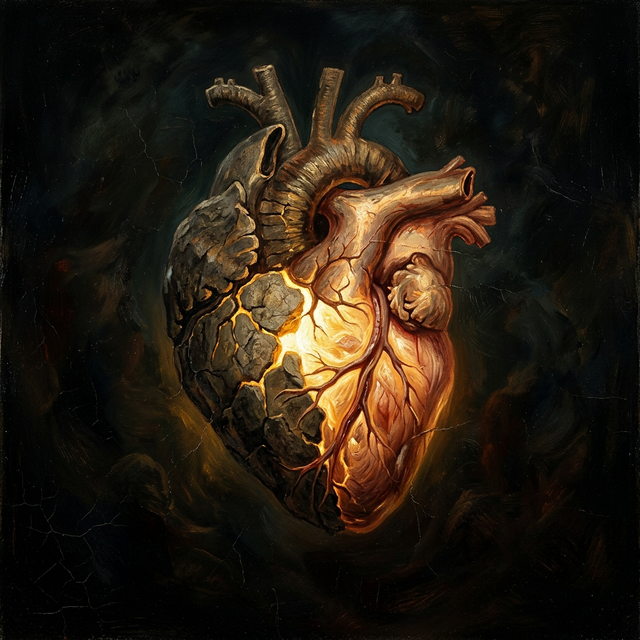
Left to ourselves, we always choose to resist Him. Our hearts are hearts of stone—hard, cold, and unresponsive to the warmth of the Gospel.
要理解为什么恩典必须是“不可抗拒”(有效)的,我们必须先了解在基督之外人类心灵的状态。圣经并未将我们描述为“轻微病患”或“中立状态”,而是说我们在过犯中死了。
“当我们死在过犯中的时候,(上帝)便叫我们与基督一同活过来。你们得救是本乎恩。”
—— 以弗所书 2:5
一个死人不会反抗医生,一个死人只是“处在死亡中”。正如马丁·路德在他的杰作《意志的束缚》中反驳伊拉斯谟时所言,人的意志并非一个能独立选择上帝的“自由主体”。它是自身欲望的仆人。
“人的意志就像一头驮兽。如果上帝骑在上面,它就会照着上帝的旨意去行……如果撒但骑在上面,它就会照着撒但的旨意去行。它不能选择跑向哪一个骑者……而是骑者们自己在争夺对它的占有和控制。”
—— 马丁·路德,《意志的束缚》
如果任由我们自己,我们永远会选择抵挡祂。我们的心是“石心”——坚硬、冰冷,对福音的温暖毫无反应。
3. Regeneration: The Sweet Drawing
3. 重生:甘甜的牵引
The miracle of irresistible grace is the miracle of regeneration (being born again). Reformed theology makes a crucial distinction here: Regeneration precedes faith. God does not wait for us to believe so He can give us life; He gives us life so we can believe.
To understand this, we must distinguish between the Outward Call and the Inward (Effectual) Call:
- The Outward Call: The Gospel is preached to all. This call is often resisted because men, by nature, are dead in sin (Eph 2:1).
- The Inward Call: The Holy Spirit works directly in the elect’s heart, removing the “heart of stone” and giving a “heart of flesh” (Ezekiel 36:26).
This is what we call Monergism—it is 100% the work of God alone. We didn’t help God create us biologically, and we don’t help Him recreate us spiritually. As the Westminster Confession of Faith (10.1) explains, God saves people by:
"...renewing their wills, and by his almighty power determining them to that which is good; and effectually drawing them to Jesus Christ; yet so as they come most freely, being made willing by his grace."
— Westminster Confession of Faith, 10.1
Once God heals our eyes, we don’t want to stay in the dark. This truth was defended as early as the Council of Orange (529 AD):
"If anyone says that the beginning of faith... is in us naturally and not by a gift of grace, that is, by the inspiration of the Holy Spirit bringing our will from infidelity to faith... he is proved to be an enemy to the teaching of the Apostles."
— Canons of the Council of Orange, Canon 5
As St. Augustine famously put it:
"Thou hast moved us to delight in praising Thee; for Thou hast formed us for Thyself, and our hearts are restless till they find rest in Thee... God does not force the unwilling, but He makes the unwilling willing."
— St. Augustine
不可抗拒之恩典的神迹就是重生(出生入死)的神迹。改革宗神学在这里做出了一个至关重要的区分:重生先于信心(Regeneration precedes faith)。上帝并非等到我们相信后才赐予我们生命;祂是先赐予我们生命,使我们能够相信。
要理解这一点,我们必须区分“外在呼召”与“内在(有效)呼召”:
- 外在呼召:福音向所有人传讲。这种呼召经常被抗拒,因为人按天性在罪中是死的(弗 2:1)。
- 内在呼召:圣灵直接在选民心中动工,除掉“石心”,赐予“肉心”(以西结书 36:26)。
这就是我们所说的“独作论”(Monergism)——这圣工百分之百是上帝独自完成的。在生物学意义上,我们没有协助上帝创造我们;在属灵意义上,我们也无法协助祂重造我们。正如《威斯敏斯特信条》(10.1)所阐明的,上帝拯救人是:
“……重新更新其意志,用祂的大能使他们趋向于善,并有力地吸引他们到耶稣基督里去。然而他们来得极其自愿,因他们在神的恩典中已经变得情愿了。”
——《威斯敏斯特信条》,10.1
一旦上帝医治了我们的眼睛,我们就再也不想要留在黑暗中了。这一真理早在公元 529 年的奥兰治会议(Council of Orange) 中就得到了辩护:
“若有人说,信仰的开端……是我们天生就有的,而非由恩典的赐予,即并非由圣灵的启迪使我们的意志从不信转向相信……这便证明他是使徒教训的仇敌。”
—— 奥兰治会议,条款 5
正如圣奥古斯丁那段名言所描述的:
“祢激励我们以赞美祢为乐;因为祢是为着祢自己而创造了我们,我们的心若不安息在祢里面,便永不得安宁……上帝不强迫不情愿的人,但祂使不情愿的人变得情愿。”
—— 圣奥古斯丁
4. The Clash at Dort: Persuasion or Power?
4. 多特会议的博弈:劝导还是大能?
In the 17th century, the Arminians (Remonstrants) argued that grace was merely a “moral persuasion”—a gentle nudge from God that man could easily reject. They wrote in their Articles of Remonstrance (1610):
“But as respects the mode of the operation of this grace, it is not irresistible; inasmuch as it is written concerning many, that they have resisted the Holy Ghost.” — Remonstrants’ Article 4
The Synod of Dort (1618–1619) recognized that if grace remains resistible, then the final glory for salvation belongs to the man who didn’t resist, rather than the God who saved. They responded by describing grace as a supernatural resurrection:
"It is an operation which... is not inferior in efficacy to creation or the resurrection of the dead; so that all those in whose hearts God works in this amazing way are certainly, unfailingly, and effectively regenerated, and do actually believe."
— Canons of Dort, Article 12
The doctrine of Irresistible Grace is the doctrine of Sovereign Rescue. If you are a believer today, it is because God loved you too much to leave you in your rebellion. He conquered your resistance. He pursued you until He won your heart.
As the Canons of Dort beautifully states:
在 17 世纪,亚米念派(抗辩派)认为恩典仅仅是一种“道德劝导”——是上帝的一种温柔提醒,而人可以轻易地拒绝它。他们在 1610 年的《抗辩信条》 中写道:
“但关于此恩典运作的方式,它并非不可抗拒的;因为经载有许多人抗拒了圣灵。” —— 抗辩信条,条款 4
多特会议(1618-1619)意识到,如果恩典始终是可以抗拒的,那么救赎的最终荣耀就属于那个“没有抗拒”的人,而非拯救他的上帝。作为回应,他们将恩典描述为一次超自然的复活:
“这种运作……在效力上不亚于创造或死人复活;以至于所有上帝以这种惊人方式在心中动工的人,都必定、绝无误地、且有效地重生,并确实地相信。”
——《多特信经》,第 12 条
“不可抗拒的恩典”这一教义本质上是“主权的拯救”。如果你今天是一个信徒,那是因为上帝太爱你了,以至于不愿让你留在反叛中。祂战胜了你的抗拒。祂追求你,直到赢得了你的心。
正如《多特信经》极美地表述:
"God... produces both the will to believe and the act of believing... He opens the closed, and softens the hard heart... He makes the will, which was before dead, now alive; which was evil, now good; which was unwilling, now willing."
— Canons of Dort, Article 11-12
“上帝……不仅赐予相信的能力,也产生了相信的意志和相信的行为……祂开启关闭的,软化坚硬的心……祂使那原是死的意志现在活了;原是恶的,现在变善了;原是不情愿的,现在变得情愿了。”
——《多特信经》,第 11-12 条
5. Conclusion: A Willing Surrender
5. 结论:心甘情愿的投降
No one is forced into heaven. No one will be standing before the throne of God saying, “I didn’t want to be here, but God made me.” Every single person in the new creation will be there because they wanted to be there—but they wanted to be there only because God, in His infinite mercy, changed their “I won’t” into “I will.”
It is not the “rape” of the will; it is the resurrection of the will. We surrender to Christ not because we are forced by a whip, but because we are captivated by a Beauty we can no longer resist.
没有一个人是被强迫进入天堂的。没有人会站在上帝的宝座前说:“我并不想来这里,但上帝逼我来了。”新造的人中的每一个人之所以在那里,是因为他们想要在那里——但他们之所以想要,仅仅是因为上帝在祂无限的慈爱中,将他们的“我不愿”变成了“我愿意”。
这不是对意志的“强奸”,而是对意志的复活。我们向基督投降,不是因为被皮鞭威逼,而是因为我们被一种再也无法抗拒的“美”所俘获。
"Your people will offer themselves freely on the day of your power..."
— Psalm 110:3
“当你掌权的日子,你的民要以圣洁的妆饰为衣,甘心牺牲自己……”
—— 诗篇 110:3