The Triumphant Songs of the Cross: Theological Mysteries of Christ's Seven Last Words 十架上的凯歌:基督十架七言的神学奥秘
A deep theological reflection on the seven utterances of Jesus from the cross, blending the warmth of C.H. Spurgeon with the systematic depth of A.W. Pink to explore the perfect work of redemption. 深入探讨耶稣在十架上的七个呼吁,融合司布真的温情与平克的系统神学深度,剖析救主完美的代偿性救赎之功。
Listen to English audio
聆听中文语音
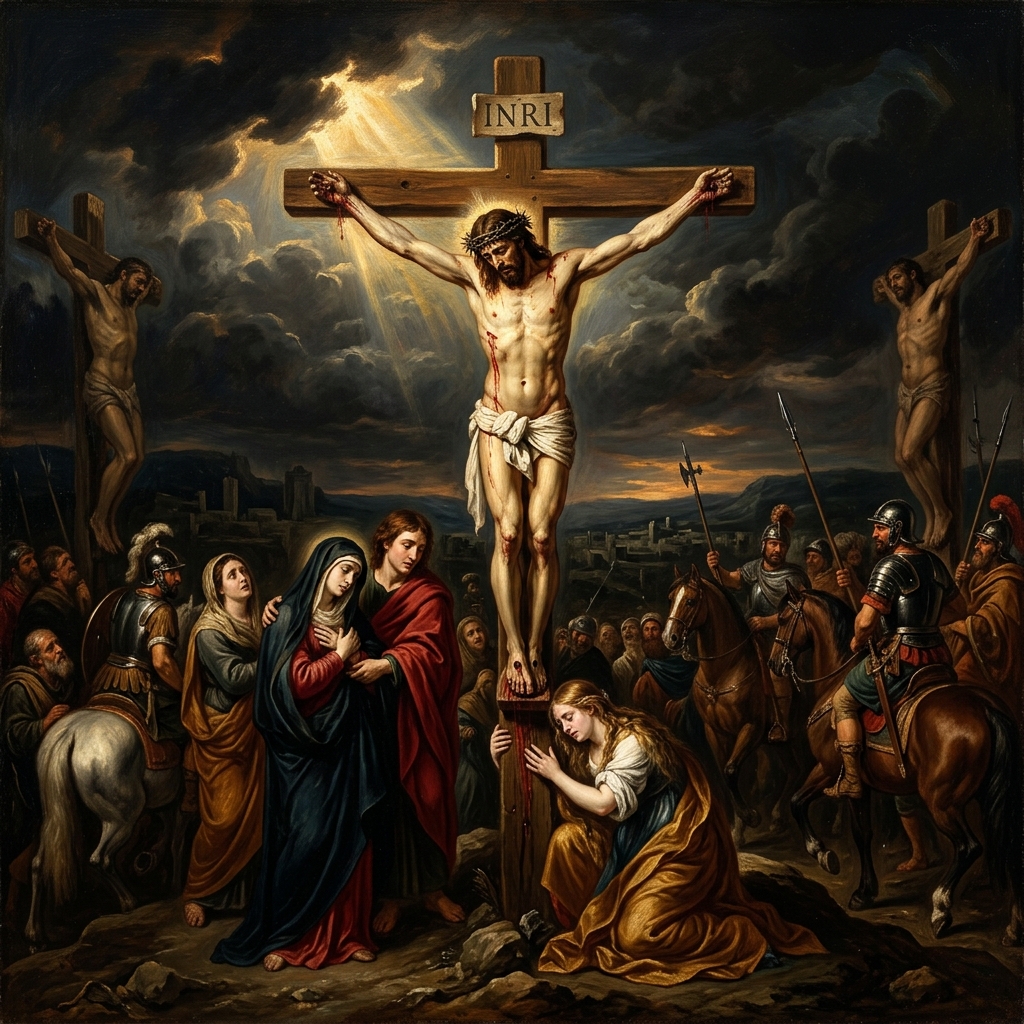
The seven utterances of our Lord Jesus Christ from the cross are not merely the cries of a dying man; they are the triumphant proclamations of a King completing His conquest. The “Historic Christian Faith” understands Christ’s death as being simultaneously natural (real physical death), unnatural (the sinless dying for the sinful), preternatural (eternally decreed by God), and supernatural (an active yielding of His soul). In these seven “words,” we find the exhaustive summary of the Savior’s heart, His offices, and His finished work.
主耶稣在十字架上发出的七个呼吁,不仅仅是一个临终之人的哀鸣,更是一个正在完成征服的君王所宣告的凯歌。“历史基督教信仰”将基督之死理解为四重性的:它是自然的(真实的肉身死亡)、非自然的(无罪者代有罪者死)、超自然的(神在永恒中的定旨)以及超凡的(他主动交出灵魂)。在这“七言”中,我们能找到救主心肠、职分及其成全之工的详尽总结。
1. The Word of Intercession
1. 代求之言
"Father, forgive them, for they know not what they do."
— Luke 23:34
“父啊!赦免他们;因为他们所做的,他们不晓得。”
—— 路加福音 23:34
Christ began His dying journey not with a curse for His enemies, but with a prayer for them. As Spurgeon noted, this intercession was the first great act of His High Priestly office on the altar of the cross. He did not plead for His own relief, but for the forgiveness of those who drove the nails.
基督死亡之旅的起点,并非对圣仇敌的咒诅,而是为他们的祈祷。正如司布真所言,这一代求是他在十架祭坛上作为大祭司职任的第一个伟大行动。他没有祈求自己得解脱,而是祈求赦免那些钉他十字架的人。
"While the hammer was still bedewed with his blood, and the nails were being driven through his hands, he began his intercession. This was the fulfillment of the prophecy, 'He made intercession for the transgressors.'"
— C.H. Spurgeon
“当锤子上还沾着他的血,钉子正穿透他的双手时,他便开始了代求。这正是先知预言的应验:‘他……为罪犯代求’。”
—— 司布真
2. The Word of Sovereignty
2. 主权之言
"Truly, I say to you, today you will be with me in paradise."
— Luke 23:43
“我实在告诉你,今日你要同我在乐园里了。”
—— 路加福音 23:43
Even in the depths of humiliation, Christ exercised His kingly authority. To the dying thief, Jesus did not offer a mere hope, but a royal decree. A.W. Pink noted that this word refutes the errors of purgatory and “soul sleep”—the believer’s transition to Paradise is immediate and certain. Spurgeon marveled at the speed of this grace—not a delayed reward, but “today.”
即便在极度的羞辱中,基督依然行使着他君王的主权。对于那个临死的强盗,耶稣赐予的不是模糊的希望,而是皇家的圣旨。A.W.平克指出,这句话有力地反驳了“炼狱”和“灵魂睡眠”的错误教导——圣徒与主同在是即刻且确凿的。司布真则惊叹于这恩典的神速——不是延迟的奖赏,而是“今日”。
"The Lord Jesus captured this soul at the very gates of hell. It shows us that he has the keys of death and of hell even when he is at the point of death himself."
— C.H. Spurgeon
“主耶稣在地域的门口夺回了这个灵魂。这向我们显明,即便他自己正处于死地,他依然握有死亡和阴间的钥匙。”
—— 司布真
3. The Word of Human Tenderness
3. 柔情之言
"Woman, behold, your son!" ... "Behold, your mother!"
— John 19:26-27
“女子,看,你的儿子!”……“看,你的母亲!”
—— 约翰福音 19:26-27
In His cosmic struggle against sin, Jesus did not forget His earthly obligations. He cared for His mother, showing that the “Historic Christian Faith” is local and personal as much as it is universal. Spurgeon suggests that this word delivers us from the idea of a stoic Savior—He felt the pangs of human relationships.
在对抗罪恶的宇宙性争战中,耶稣并未忘记他的属世义务。他照顾自己的母亲,这表明“历史基督教信仰”既是普世的,也是关乎个人与当下的。司布真指出,这句话让我们摆脱了对救主那种“斯多亚式”冷酷的想象——他能感受到人间关系的阵痛。
"He would have us learn that no duty, however small, is to be neglected, and no affection, however tender, is to be forgotten, even in the midst of our greatest trials."
— C.H. Spurgeon
“他要我们学习,即便在最重大的试炼中,任何小小的本分都不应被忽视,任何细微的柔情都不应被遗忘。”
—— 司布真
4. The Word of Substitution
4. 代赎之言
"Eli, Eli, lema sabachthani?" that is, "My God, my God, why have you forsaken me?"
— Matthew 27:46
“以利!以利!拉马撒巴各大尼?”就是说:“我的神!我的神!为什么离弃我?”
—— 马太福音 27:46
This is the dark center of the cross. Here, the fellowship of the Trinity was uniquely strained as the Father turned His face away. Why? Because, as Pink emphasizes, the absolute holiness of God cannot look upon sin. As the Son “became sin” for us, the Father’s face was hidden in justice, making this the ultimate proof of substitutionary atonement.
这是十架苦路幽暗的核心。在这里,三位一体的团契经历了独一无二的张力。圣父为何掩面?因为正如平克所强调的,上帝绝对的圣洁断不能看罪。当圣子为我们“成为罪”时,父神在公义中掩面。这是代赎性受苦最确凿的凭据。
"Infinite justice demanded that sin should be punished, and the Son stood in our place to receive the stroke that was due to us. He was forsaken that we might never be forsaken."
— C.H. Spurgeon
“无限的公义要求罪必须受罚,圣子便站在我们的位分上,领受了那本该属于我们的击打。他被离弃,是为了叫我们永不被离弃。”
—— 司布真
5. The Word of True Humanity
5. 人性之言
"I thirst."
— John 19:28
“我渴了。”
—— 约翰福音 19:28
While the previous cry dealt with spiritual agony, this one highlights Christ’s physical reality and His perfect self-possession. Even in extreme pain, Jesus was mindful to fulfill the Scriptures, specifically Psalm 69:21. He who is the Water of Life suffered literal thirst so that we might never thirst again, showing His perfect obedience to the Father’s Word.
如果说前一呼喊关乎属灵的煎熬,这一句则凸显了基督肉身的真实及其完美的自我克制(Divine Self-Possession)。即便在极恸中,耶稣仍留心要使经上的话应验(特别是诗篇 69:21)。那作为生命之水的,忍受了真实干渴,为要叫我们永远不渴,这彰显了他对父神话语完美的顺服。
"His thirst was the result of his agony. It shows us that he was a man of like passions with ourselves, and that his sufferings were real, and not a mere phantom."
— C.H. Spurgeon
“他的渴是极其痛苦的结果。这向我们显明,他是一个与我们性情相近的人,他的受苦是真实的,而非幻影。”
—— 司布真
6. The Word of Achievement
6. 成全之言
"It is finished."
— John 19:30
“成了!”
—— 约翰福音 19:30
To Spurgeon, this was the greatest word ever spoken. It is not a sigh of relief, but a shout of victory. The Law was fulfilled, and the price of redemption was paid in full. “It is finished” means that for His sheep, salvation was definitively bought and secured—it was not a mere “possibility” left to the uncertain will of man, but a completed conquest that cannot be undone.
在司布真看来,这是有史以来最伟大的誓言。它不是解脱的叹息,而是胜利的呼号。律法成全了,赎价也已全额付清。“成了”意味着对于他的羊,救恩已经真实且确凿地被赎买并担保了。这并非仅仅留下一个等待罪人意志去决定的“得救可能性”,而是一场已经大功告成、不可逆转的征服。
"Finished is that which God's justice required; finished is that which the sinner's case needed. It is a sea of meaning in a drop of language."
— C.H. Spurgeon
“上帝公义所要求的,成了;罪人境况所必须的,成了。这是一滴言语中的汪洋大海。”
—— 司布真
7. The Word of Confidence
7. 信靠之言
"Father, into your hands I commit my spirit!"
— Luke 23:46
“父啊!我将我的灵魂交在你手里。”
—— 路加福音 23:46
The circle is complete. Christ began with “Father” and ends with “Father.” Having passed through the godforsaken darkness, He rests again in the Father’s hands. Spurgeon calls this the believer’s pattern for dying—not in terror, but in conscious resignation to a loving God.
圆圈合拢了。基督以“父”开始,又以“父”结束。穿过了那神所弃绝的幽冥,他再次安息在父的手中。司布真称此为信徒死亡的范式——不是在惊恐中,而是在清醒地归向慈爱上帝。
"He who lived for the Father, died into the Father's hands. Let us also learn to live so that we may die with such a holy confidence."
— C.H. Spurgeon
“那为父而活的,死在了父的手中。让我们也学会这样生活,好叫我们能在圣洁的信心中死去。”
—— 司布真
The Seven Words from the cross remain the deepest well of meditation for the soul. They reveal a Savior who, even in death, was the master of His destiny and the architect of our salvation. May we ever look to the finished work of our Lord Jesus Christ.
十架七言依然是灵魂最深邃的默想之井。它们向我们展示了一位救主,即便是面对死亡,他依然是自己命运的主宰和我们救恩的架构师。愿我们要永远仰望主耶稣基督那已经“成了”的工作。
Summary: The Four-fold Nature of Christ’s Death
总结:关于基督之死的四重本质
To fully grasp the mystery of these seven utterances, we must reflect on the unique nature of the Savior’s death as delineated by A.W. Pink:
- Natural: It was a real physical death, where He truly experienced the separation of soul and body.
- Unnatural: Being perfectly sinless, He had no legal obligation to die; He died solely as a substitute for others.
- Preternatural: It was not an accident of history but was eternally decreed in the divine counsel of God.
- Supernatural: He was never defeated by death; He was the master of it, actively yielding His spirit in perfect sovereignty.
为了全然领悟这七个呼吁中的奥秘,我们必须深思 A.W. 平克所描画的救主之死那独特的本质:
- 它是自然的 (Natural):这是一次真实的肉身死亡,他切实地经历了灵魂与身体的分离。
- 它是非自然的 (Unnatural):因他全然无罪,其本身并无法律上的受死义务;他是唯独作为他人的替代者而死。
- 它是超自然的 (Preternatural):这并非历史的偶然,而是三位一体上帝在永恒中早已预定好的旨意。
- 它是超凡的 (Supernatural):他从未被死亡所征服;他始终是死亡的主宰,在完美的主权中主动交出自己的灵魂。