Why Will It Be Given to You When You Ask, Seek, and Knock? 为什么你们祈求,就给你们;寻找,就寻见;叩门,就给你们开门?
Exploring the profound theological promises of Matthew 7:7 through the lens of the Historic Christian Faith and the teachings of the Church Fathers. 透过大公教会正统神学与教父们的教导,探索马太福音 7:7 中关于祈求与应允的深邃神学应许。
Listen to English audio
聆听中文语音
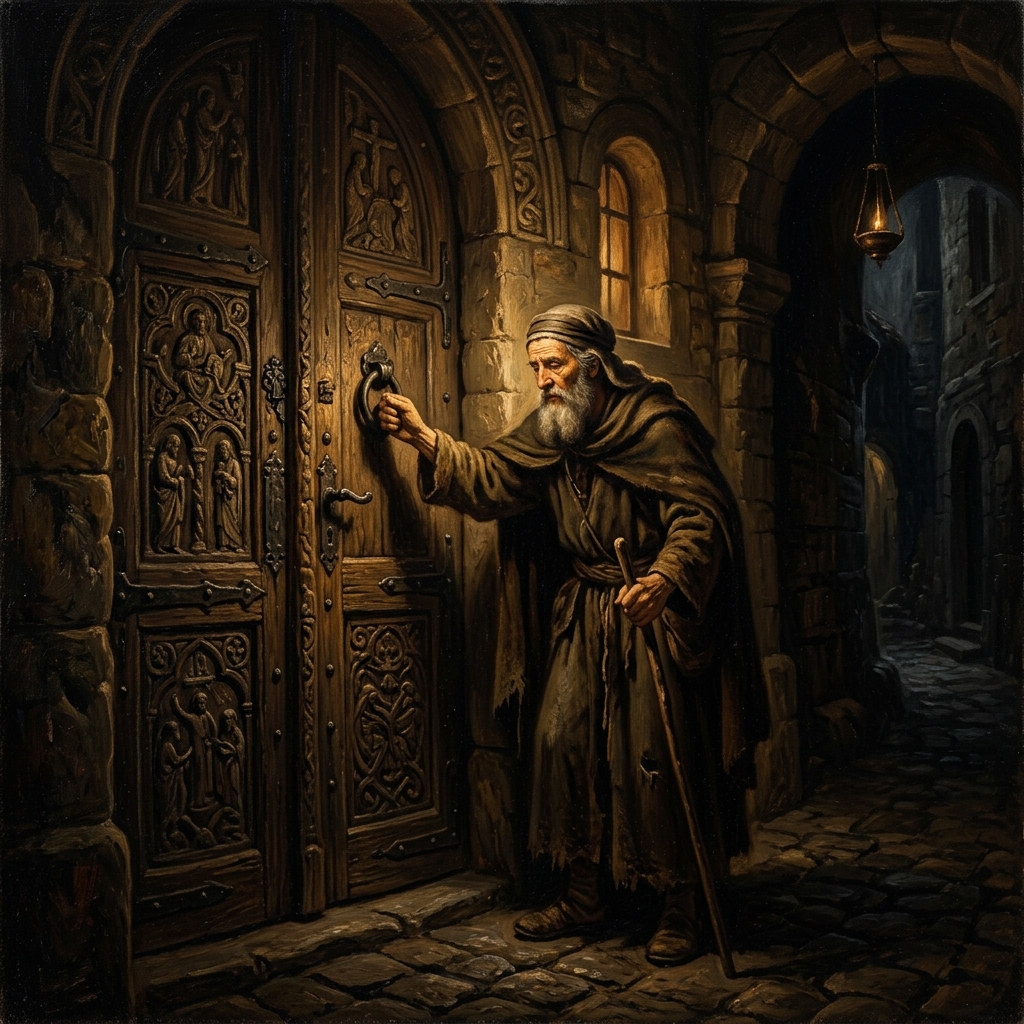
I. Introduction: The Unbreakable Triplicate Promise
一、 引言:牢不可破的三重应许
"Ask, and it will be given to you; seek, and you will find; knock, and it will be opened to you."
— Matthew 7:7
“你们祈求,就给你们;寻找,就寻见;叩门,就给你们开门。”
—— 马太福音 7:7
In the Sermon on the Mount, Jesus issues a command wrapped in a breathtaking promise. The repetition of “ask, seek, knock” is not merely poetic duplication; rather, it represents a progression of increasing earnestness in prayer. Yet, the foundational question remains: Why is the promise so absolute? Why are we guaranteed that the door will open?
在“登山宝训”中,耶稣发出了一个被惊人应许所包裹的命令。“祈求、寻找、叩门”的重复并非纯粹的诗意修辞;相反,它代表着祷告中日益恳切的递进过程。然而,最根本的问题仍然在于:为什么这个应许如此绝对?为什么我们能确信那扇门必然会打开?
If we view this passage through a human-centric lens, we might mistakenly assume that the success of prayer depends on the intensity of our knocking or the purity of our asking. However, the Historic Christian Faith has consistently taught that the efficacy of this promise rests entirely upon the character of the One who stands behind the door, not the one knocking on it.
如果我们透过以人为中心的视角来看待这段经文,我们可能会错误地以为:祷告的成功取决于我们叩门的力度或是我们祈求的纯洁度。然而,大公教会正统神学始终教导我们,这一应许的效力完全取决于站在门后的那一位的神圣品格,而非在于叩门之人的功劳。
II. The Character of the Father: A Willingness to Give
二、 天父的属性:乐意赐予的神
The immediate context of Matthew 7 reveals the logic of Christ: “If you then, who are evil, know how to give good gifts to your children, how much more will your Father who is in heaven give good things to those who ask him!” The absolute certainty of answered prayer is grounded entirely in the paternal goodness of God.
马太福音第7章的上下文揭示了基督的逻辑:“你们虽然不好,尚且知道拿好东西给儿女,何况你们在天上的父,岂不更把好东西给求他的人吗!”祷告必然蒙应允的绝对确据,完全根植于上帝作为慈父的良善之中。
Augustine of Hippo profoundly observed that God’s commands to pray are actually His desire to enlarge our capacity to receive what He already intends to give. He commands us to ask because He is burning with the desire to bestow grace.
希波的奥古斯丁曾有过极为深刻的观察,他指出上帝吩咐我们祷告,实际上是为了扩大我们领受恩典的度量,好让我们能装下祂早已打算赐给我们的美好事物。祂命令我们祈求,正是因为祂迫切地渴望施恩。
"He who urges you to ask, does not wish to refuse you. How much more is it the case that He who gives the command to petition, gives also the fulfillment of the petition?"
— Augustine of Hippo (Sermons on the New Testament, Sermon 55)
“那敦促你祈求的,绝不是为了拒绝你。既然是祂命令你去祈求,祂岂不更要亲自成全这祈求吗?”
—— 希波的奥古斯丁 (新约讲道集,第55讲)
Therefore, the door is opened not because we forced the lock with our theological precision or spiritual stamina, but because the Father was waiting intimately by the door, ready to turn the handle at our first faint knock.
因此,大门得以敞开,并非因为我们用精准的神学知识或属灵的毅力撬开了门锁,而是因为天父早已亲密地等候在门边,只等我们发出头一声微弱的叩击,便预备好扭动门把手。
III. The Mediator’s Merit: The Key to the Door
三、 中保的功劳:开启大门的钥匙
Yet, a theological tension arises. If God is completely holy, and we are utterly sinful, how dare we approach His door at all? The answer of the Historic Christian Faith is that our asking, seeking, and knocking are never done in a vacuum; they belong to a Covenant of Grace mediated by Jesus Christ.
然而,这里出现了一个神学张力。如果上帝是全然圣洁的,而我们是全然败坏的罪人,我们怎敢靠近祂的大门?大公教会正统神学的答案是:我们的祈求、寻找与叩门,从来不是发生在真空中,而是发生在一个由耶稣基督作为中保的恩典之约里。
Our prayers find audience in heaven only because the Son has already torn the veil. We are permitted to knock because Christ was nailed to the wood to secure our access. The Westminster Confession of Faith perfectly articulates why our prayers are regarded and answered—not for our sake, but for His.
我们的祷告之所以能上达天庭,仅仅是因为圣子已经为我们裂开了幔子。我们被允许去叩门,是因为基督被钉在木头上,从而为我们换取了进入至圣所的特权。《威斯敏斯特信仰告白》极其精准地阐明了我们的祷告为何能被垂听和应允——不是因着我们,而是因着祂。
"Prayer, with thanksgiving, being one special part of religious worship, is by God required of all men: and, that it may be accepted, it is to be made in the name of the Son, by the help of His Spirit."
— Westminster Confession of Faith (Chapter XXI. III)
“以感谢为内容的祷告是宗教敬拜的一个特别组成部分,是上帝对所有人提出的要求:为了使这祷告能蒙悦纳,它必须奉圣子的名,并借着圣灵的帮助而发出。”
—— 威斯敏斯特信仰告白 (第二十一章,第三条)
When we knock, we do not knock as strangers demanding entry. We knock under the blood-bought adoption of sons and daughters. It is the righteousness of Christ imputed to us that transforms the terrifying throne of judgment into the Throne of Grace.
当我们叩门时,我们并不是作为强求进入的陌生人,而是带着重价买赎回来的儿女名分去叩门。正是那归算在我们身上的基督之义,将原本令人战栗的审判宝座转化为施恩的宝座。
IV. Refuting the Myth of Natural Seeking
四、 驳斥关于“人天然能寻见”的迷思
Throughout church history, some have misinterpreted this verse to champion human autonomy. They suggest that the act of seeking is derived from the innate introspection of the human heart and some remaining spark of natural goodness that prompts us to knock on God’s door.
纵观教会历史,一些人误解了这节经文,以此来鼓吹人的自主性。他们声称,“寻找”这一行为源于人心天然的自省能力,以及人内里残存的一丝良善,正是这些能力激发了我们去叩神的大门。
“We seek because we still possess the natural ability and a remnant of goodness that leads us back to God; the choice to knock rests upon our own spiritual intuition and willpower.”
“我们去寻找,是因为我们出于自己的自省和我们残存的良善,让我们去寻找和叩门。叩门的选择完全取决于我们自身的属灵直觉。”
This interpretation is fundamentally heterodox. If we seek God out of our “remaining goodness,” then salvation is a cooperative effort where man takes the first decisive step. Yet, Biblical truth vehemently denies this. Romans 3:11 explicitly states, “No one seeks for God.” The natural man is spiritually dead, utterly incapable of knocking on a door he inherently opposes. We are incapable of looking upward unless grace first descends. To claim that we seek God out of natural intuition is to rob the Holy Spirit of His sovereign, initiating work.
这种解经在根本上是违背正统的。如果我们是出于“残存的良善”去寻找神,那么救恩就成了一种人神合作的工程,并且是由人迈出那最具决定性的第一步。然而,圣经真理对此予以了坚决的驳斥。罗马书 3:11 明确宣告:“没有寻求神的。”天然人在属灵上是死的,绝对无力去敲开一扇他内心其实抵挡的门。如果恩典不首先降临,我们根本无能向上仰望。宣称我们是出于天然的直觉或残存的良善去寻找神,无异于剥夺了圣灵主权起首发动的荣耀工作。
V. The Sovereign Grace of Desiring
五、 渴望背后的主权恩典
Finally, we must recognize a profound paradox. If God knows what we need before we ask (Matthew 6:8), why must we ask at all? The answer lies in the sovereign work of God within our hearts. The very desire to ask, the perseverance to seek, and the strength to knock are themselves preceded by the secret grace of God.
最后,我们必须认识到一个深邃的悖论。既然上帝在我们祈求以先,就已经知道我们所需用的(马太福音 6:8),那为什么还要我们求呢?答案在于上帝在我们心中所做的主权之工。我们内心想要去祈求的渴望、去寻找的毅力、去叩门的力量本身,都是上帝暗中施恩在先的结果。
We do not generate the initiative to find God; He gives us the thirst, so that He may satisfy it. John Calvin beautifully summarizes this relationship between our asking and God’s sovereign provision.
并不是我们主动发起了寻找上帝的创举;而是祂先赐给了我们干渴,好让祂亲自来满足这干渴。约翰·加尔文对于我们“祈求”与上帝“主权预备”之间的关系,做出了极其优美的总结。
"Whenever we are preparing to pray, let us remember that the Lord is already extending His hand to us to help our weakness... We never knock at God's door, but He meets us."
— John Calvin (Commentary on a Harmony of the Evangelists)
“每当我们预备好要祷告时,让我们记住,主早已伸出了祂的手来扶助我们的软弱……我们每次去敲上帝的门,祂都会满怀热忱地出来迎接我们。”
—— 约翰·加尔文 (福音书和谐注释)
VI. Conclusion
六、 结语
“Ask, and it will be given to you” is not a mechanistic formula for earthly prosperity, but a theological guarantee of spiritual communion. We ask confidently, not because of our own merit, but because a loving Father has ordained to bless us through the perfect mediation of His Son, Jesus Christ. The door opens because the Keeper of the Door loves you.
“你们祈求,就给你们”绝不是什么获取世俗成功与财富的机械公式,它是属灵相通的神学担保。我们之所以能满怀信心地祈求,绝非因为我们自己的功劳,而是因为一位慈爱的天父已经定意要透过祂爱子耶稣基督的完美中保来赐福我们。大门敞开,只因为那看门的主爱着你。
References & Further Reading
参考资料与延伸阅读
- Augustine of Hippo. Sermons on the New Testament, Sermon LV. Transl. R.G. MacMullen. Nicene and Post-Nicene Fathers, First Series, Vol. 6.
- Calvin, John. Commentary on a Harmony of the Evangelists Matthew, Mark, and Luke, Vol. 3. Transl. William Pringle. Calvin Translation Society, 1845.
- The Westminster Assembly. The Westminster Confession of Faith (1646), Chapter XXI: “Of Religious Worship, and the Sabbath Day”.
- Spurgeon, Charles H. The Treasury of David (Commentary on Psalm 145 on the promptness of God in answering prayer).
- 希波的奥古斯丁 (Augustine of Hippo). 《新约讲道集》第55讲 (Sermons on the New Testament, Sermon LV).
- 约翰·加尔文 (John Calvin). 《福音书和谐注释》(Commentary on a Harmony of the Evangelists).
- 威斯敏斯特会议. 《威斯敏斯特信仰告白》(1646) 第二十一章:“论宗教敬拜与安息日”.
- 司布真 (Charles H. Spurgeon). 《大卫宝库》(The Treasury of David) 有关神应允祷告之快的神学论述.