The Battle for Romans 7: How a Single Chapter Triggered the Synod of Dort 罗马书7章之战:一段经文如何引发了多特会议?
Exploring the historical and theological conflict over Romans 7 that led to the Synod of Dort and the formulation of the TULIP. 探讨引发多特会议的关于罗马书7章的历史与神学冲突,以及多特五要点的形成过程。
Listen to English audio
聆听中文语音
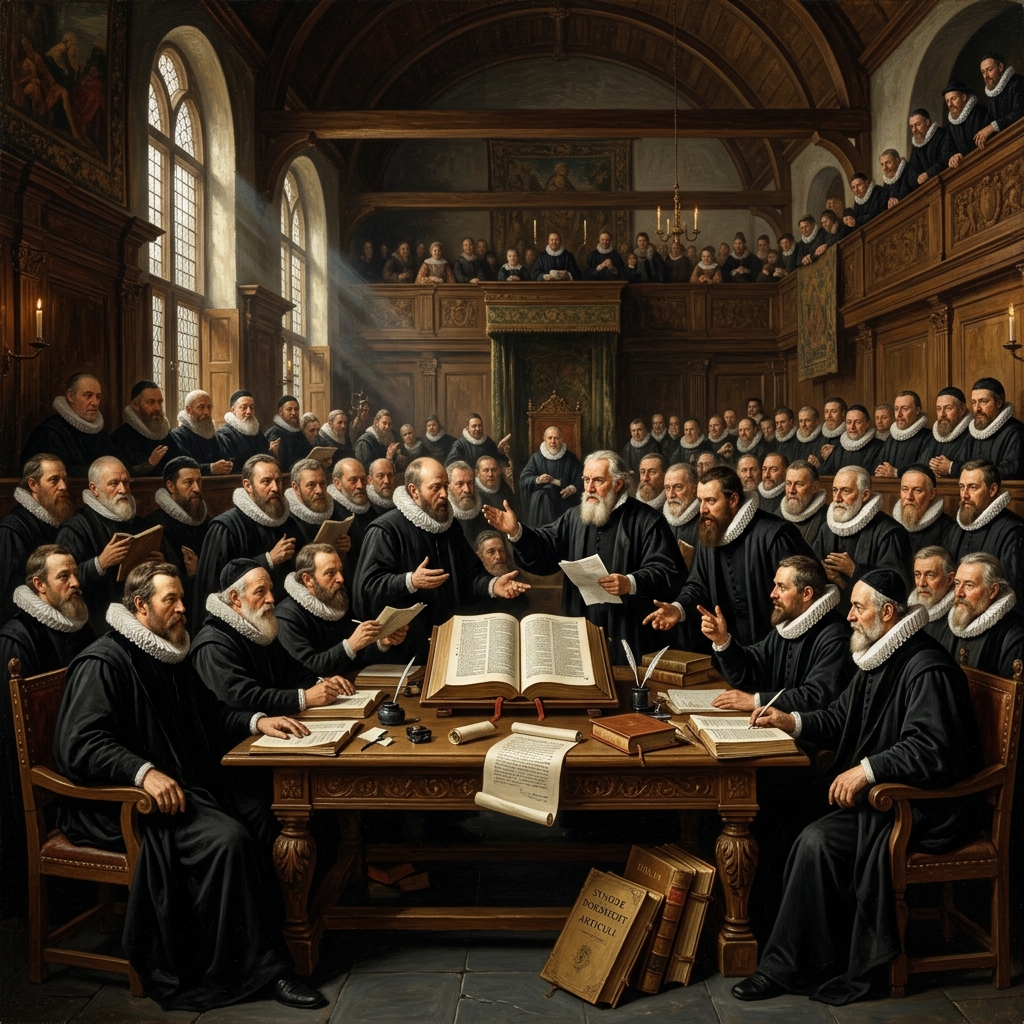
The Seed of Conflict: Arminius and the Romans Lectures
冲突的种子:亚米念与罗马书讲座
In 1588, Jacobus Arminius, a man with impeccable Reformed credentials and a recommendation from Theodore Beza himself, became a pastor in Amsterdam. However, as he began to preach through the Book of Romans, whispers of doubt started to circulate. The storm did not begin with abstract predestination, but with the interpretation of specific scriptures, most notably Romans chapter 7.
1588年,雅各布斯·亚米念(Jacobus Arminius)成为阿姆斯特丹的一名牧师。他拥有坚实的归正派资历,甚至收到了西奥多·贝扎(Theodore Beza)本人的热情推荐。然而,当他开始讲解《罗马书》时,疑虑开始滋生。这场风暴并非始于抽象的预定论,而是始于对特定经文的解释,其中最著名的莫过于《罗马书》第7章。
The Great Divide: Who is the Man in Romans 7?
巨大的分歧:罗马书7章中的那个人是谁?
The interpretation of Romans 7:14-25 became the theological battlefield. The central question was: Is Paul describing the experience of a regenerate Christian or an unregenerate person struggling under the Law?
对《罗马书》7:14-25的解释成为了神学战场。核心问题是:保罗是在描述一个重生基督徒的经历,还是一个在律法之下挣扎的未重生者?
The Arminian View: The Unregenerate Under the Law
亚米念的观点:律法之下的未重生者
Arminius argued that the man who says “I am fleshly, sold into bondage to sin” (Rom 7:14) cannot be a Christian under grace. To him, the “inner man” described in this chapter refers to human reason or conscience, not the new nature of a believer. He believed that viewing this struggle as the Christian norm would devalue the grace of regeneration and discourage the pursuit of holiness.
亚米念认为,那个说“我是属肉体的,是已经卖给罪了”(罗7:14)的人不可能是一个在恩典之下的基督徒。对他而言,本章描述的“里面的人”是指人的理性或良知,而非信徒的新性情。他相信,如果将这种挣扎视为基督徒的常态,会贬低重生的恩典,并降低对圣洁的追求。
The Reformed Response: The Regenerate Struggle
归正派的回应:重生者的挣扎
The Reformed tradition, championed by Franciscus Gomarus and later the Synod of Dort, maintained that only a regenerate person could truly say they "joyfully concur with the law of God in the inner man" (Rom 7:22). This is the reality of "Simul Iustus et Peccator"—being simultaneously righteous in Christ yet struggling with the remnants of indwelling sin.
以弗朗西斯库斯·戈马鲁斯(Franciscus Gomarus)以及后来的多特会议为代表的归正派传统坚称,只有重生的人才能真正说出“按着我里面的意思,我是喜欢神的律”(罗7:22)。这就是“同时是义人又是罪人”(Simul Iustus et Peccator)的现实——在基督里地位上是义人,但在经历上仍与内住罪的残余挣扎。
Scripture Focus: Romans 7
经文聚焦:罗马书7章
7:14 For we know that the Law is spiritual, but I am fleshly, sold into bondage to sin. ... 7:22 For I joyfully concur with the law of God in the inner man, ... 7:24 Wretched man that I am! Who will set me free from the body of this death? (NASB)
7:14 我们原晓得律法是属灵的,但我是属肉体的,是已经卖给罪了。…… 7:22 因为按着我里面的意思,我是喜欢神的律,…… 7:24 我真是苦啊!谁能救我脱离这取死的身体呢?(和合本)
The Catholic Gaze: “Welcome to the Club”
天主教的注视:“欢迎加入”
While the Protestants were embroiled in this conflict, the Roman Catholic Church watched with interest. From their perspective, Arminius was breaking away from the “cold determinism” of Calvin and moving back toward the Catholic doctrine of synergism—the cooperation of human will with divine grace.
当新教徒卷入这场冲突时,罗马天主教会饶有兴致地观察着。从他们的角度来看,亚米念正在打破加尔文那“冷酷的命定论”,转而向天主教的神人合作论(Synergism)——即人的意志与神的恩典合作——靠拢。
Catholic polemicists often mocked the “Sola Scriptura” principle, pointing out that both Arminius and the Reformed read the same Bible yet reached contradictory conclusions. They suspected Arminius of being influenced by the Jesuit theologian Luis de Molina, whose “Molinism” sought to balance divine sovereignty with human freedom.
天主教辩论家经常嘲讽“唯独圣经”的原则,指出亚米念和归正派读的是同一本圣经,却得出了截然相反的结论。他们怀疑亚米念受到了耶稣会神学家路易斯·德·莫林纳(Luis de Molina)的影响,后者的“莫林纳主义”试图平衡神的主权与人的自由。
From Remonstrance to TULIP
从抗辩到多特五要点
After Arminius’s death, his followers published the Remonstrance, outlining five points of disagreement with Reformed orthodoxy. The church was forced to convene the Synod of Dort (1618–1619) to respond. The resulting “Canons of Dort” summarized the biblical truth in what we now know as the five points of Calvinism (TULIP).
亚米念死后,他的追随者发表了《抗辩书》(The Remonstrance),列出了与归正派正统神学的五点分歧。教会不得不召开多特会议(1618-1619年)作出回应。由此产生的《多特信经》归纳了圣经真理,即我们现在所熟知的加尔文主义五要点(TULIP)。
Conclusion: Salvation is of the Lord
结论:救恩出于耶和华
The conflict over Romans 7 was not a mere academic exercise. It touched the very heart of the Gospel: Is salvation entirely a work of God’s grace, or does it depend on a cooperative response from the human will? The Synod of Dort drew a clear line, defending the truth that salvation, from beginning to end, belongs to the Lord.
关于《罗马书》7章的冲突并非单纯的学术练习。它触及了福音的核心:救恩完全是上帝恩典的工作,还是取决于人意志的合作回应?多特会议划定了一条清晰的界线,捍卫了救恩从始至终都属于主的真理。
References
参考文献
- How Did We Get the Canons of Dort? - Ligonier Ministries.
- Dissertation on the True and Genuine Sense of the Seventh Chapter of Romans - Jacobus Arminius.
- Commentary on Romans - John Calvin.